

Butcher's Secrets
Aus Wagyu Bavette Steak (Flap Meat) 6-7 MBS - 450g-500g
Aus Wagyu Bavette Steak (Flap Meat) 6-7 MBS - 450g-500g
Couldn't load pickup availability
A celebrated staple of classic Parisian bistros, the Australian Wagyu Bavette Steak (also known as Flap Steak or Bavette d’Aloyau) is one of the best-kept secrets in butchery. Sourced from the bottom sirloin primal, this cut features a pronounced, open grain structure that drinks up seasonings and renders out an extraordinary depth of rich, robust beef flavor.
With an MB 6–7 (Marble Score), the coarse grain of the traditional bavette is completely transformed by creamy Wagyu marbling, delivering a steak that is noticeably juicier and far more tender than traditional flank or skirt steak.
Product Highlights:
- Origin: Australian Wagyu (Sir Harry)
- Grading: 6–7 MBS (Marble Score) for rich intramuscular fat distribution
- Cut: Wagyu Bavette / Sirloin Flap Steak
- Thickness: ~1 inch thick cut
- Weight: Approx. 450g – 500g
- Packaging: Vacuum-sealed fresh-frozen to preserve moisture and tender texture
- Delivery: Dispatched via our temperature-controlled in-house cold chain riders within 24–48 hours across Metro Manila.
How to Cook Australian Wagyu Bavette (6–7 MBS)
The coarse grain of the Bavette creates deep crevices that develop an incredible, deeply caramelized crust when exposed to high heat.
- Thaw Gently: Thaw overnight in the refrigerator. Bring the meat out 20–30 minutes prior to cooking so it loses its chill.
- Dry & Season: Pat the steak completely dry with paper towels. Season generously with kosher/sea salt and freshly cracked black pepper. Its open grain also makes it ideal for garlic-herb rubs or light marinades.
- High-Heat Sear: Get a cast-iron skillet or grill screaming hot. Add just a touch of high-smoke point oil or rendered beef tallow.
- Quick Sear: Lay the bavette in the pan. Sear for 2.5 to 3 minutes per side to achieve a deep, dark mahogany crust.
- Butter Baste: In the final minute, add 1 tbsp unsalted butter, crushed garlic, and a sprig of rosemary to the pan, spooning the foaming butter continuously over the rough grain.
- Rest: Transfer to a warm board and let it rest for 6 to 8 minutes to allow the juices to redistribute through the muscle fibers.
- The Golden Rule — Cut Against the Grain: Look closely at the steak to identify the long grain lines running across it. Slice strictly against (perpendicular to) the grain into thin 1/4-inch to 1/2-inch strips. This shortens the muscle fibers and ensures every bite is melt-in-your-mouth tender.
Chef's Recommended Doneness: Medium-Rare (130°F–135°F / 55°C). Cooking Bavette past medium will cause the muscle fibers to seize and tighten up.
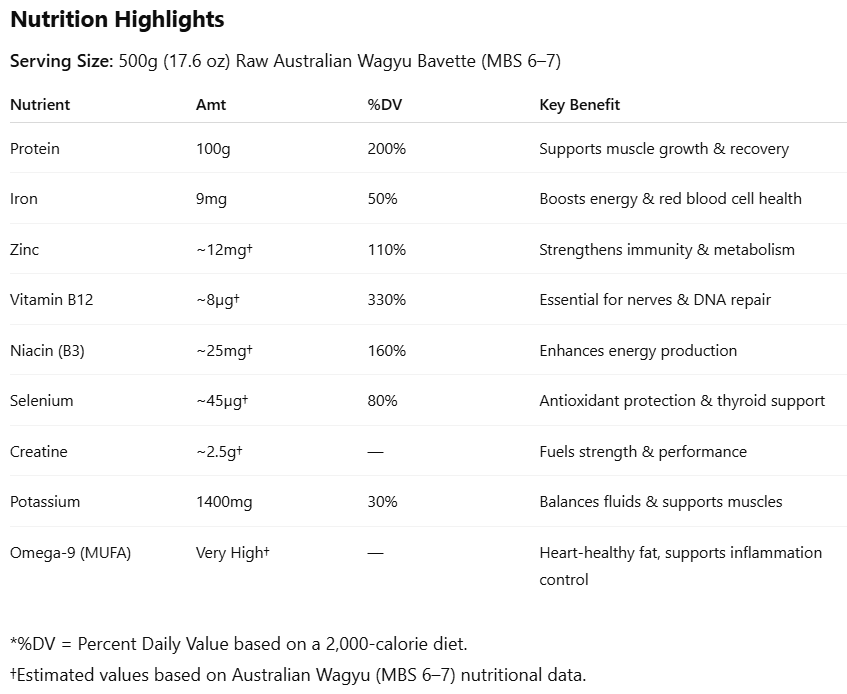
Nutrition Highlights
Serving Size: 500g (17.6 oz) Raw Australian Wagyu Bavette (6–7 MBS)
| Nutrient | Amt | %DV | Key Benefit |
|---|---|---|---|
| Protein | ~105g | 210% | Pure muscle repair and long-lasting satiety |
| Heme Iron | ~12.5mg | 69% | High iron profile naturally found in active sirloin cuts |
| Oleic Acid (Healthy Fats) | Rich | — | Low-melting-point monounsaturated fats unique to Wagyu |
| Zinc | ~15mg | 136% | Supports cell function and immune resilience |
| Vitamin B12 | ~9.5µg | 395% | Vital for central nervous function and stamina |
Frequently Asked Questions (FAQ)
What cut is Bavette, and how is it different from Flank or Skirt steak?
While often grouped together because of their long grain, the Bavette (Sirloin Flap) comes from the bottom sirloin, whereas flank comes from the abdominal wall and skirt from the diaphragm. Because of its sirloin origin and Wagyu breeding, Bavette is significantly more tender, less fibrous, and far more richly marbled than standard flank or skirt.
What does Wagyu Bavette taste like?
It delivers the holy grail of steak: the deep, bold, mineral-rich "beefy" flavor of a bistro cut combined with the buttery richness and melt-in-your-mouth fat of Australian Wagyu.
Can this cut be marinated?
Yes! Because of its loose, open-grained texture, the Bavette is considered the king of marinades. It works phenomenally with chimichurri, soy-garlic marinades, or simply coarse sea salt and garlic butter.